Old Brooch
In 1903 an Anglo-Saxon cemetery was discovered along Stamford Road in Kettering. To the south of the site, in 1904, a brooch fragment was found which is what this model is based on. The original does not appear to have survived, so evidence of its existence is limited to a drawing in an old book. I wanted to create a realistic looking version of it to show the potential that it still has to tell a story. In a museum setting, the brooch could be the start of a story of the larger site nearby.
I am grateful to Dr Toby Martin for his feedback regarding the appearance of the brooch. The surviving part of the brooch shown in the image is just the foot of the brooch, broken off at the bow. The original brooch would have had a headplate. More complete examples of this style of brooch can be found in Dr Toby Martin's book 'The Cruciform Brooch and Anglo-Saxon England.'

Final render of the brooch model.

Brooch with glowing text describing where it was originally found.
Short clip showing the transition from the drawing of the brooch, to the final model. I tried to imagine how it would have looked when it was first found.

Still image from short animation.

Screenshot of book model.

Screenshot of clay model showing the brooch in the soil.
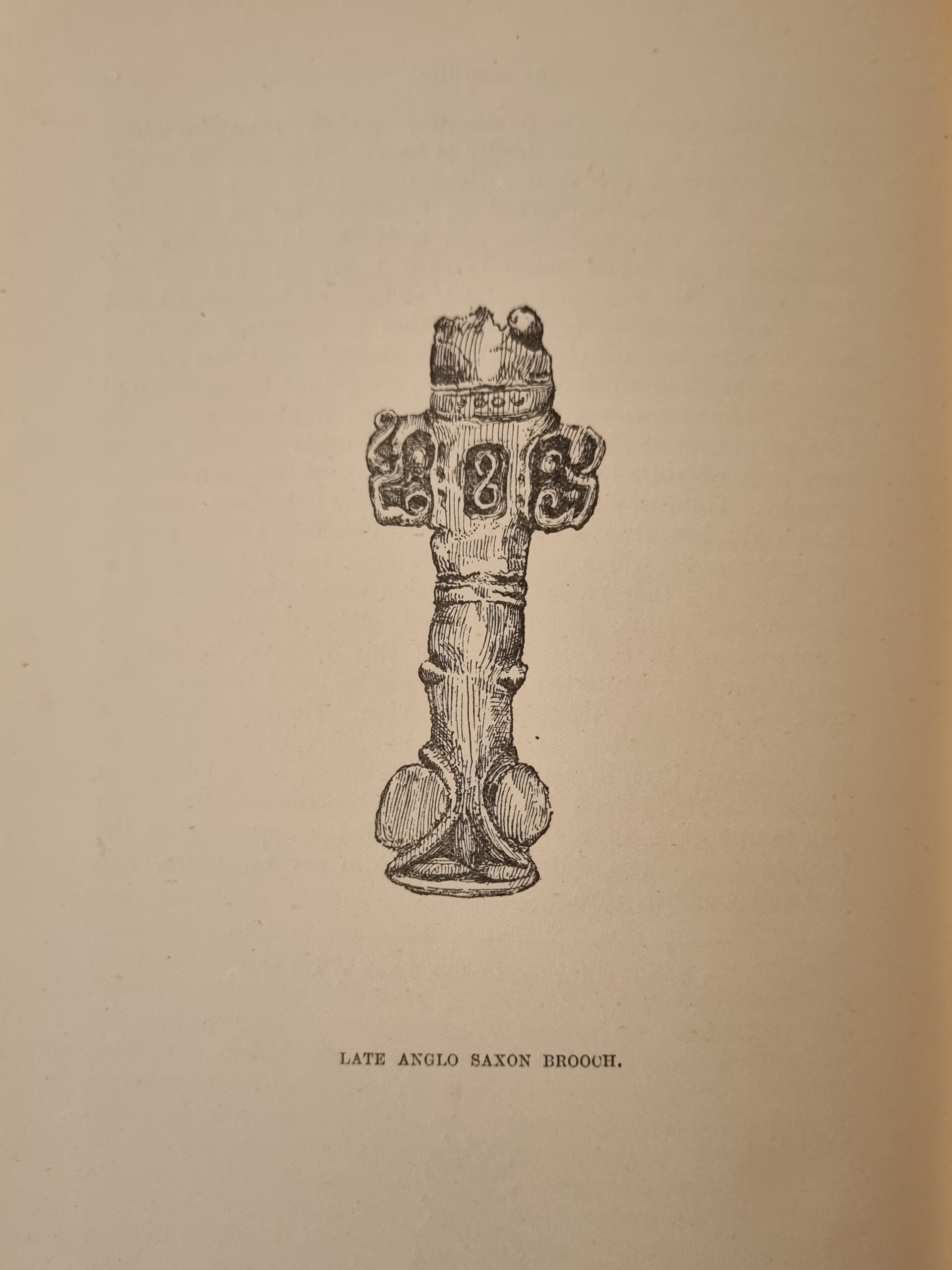
The original drawing of the brooch fragment from Frederick Bull's 'Supplement to the History of the Town of Kettering, Together with a Further Account of its Worthies.' Page 62.